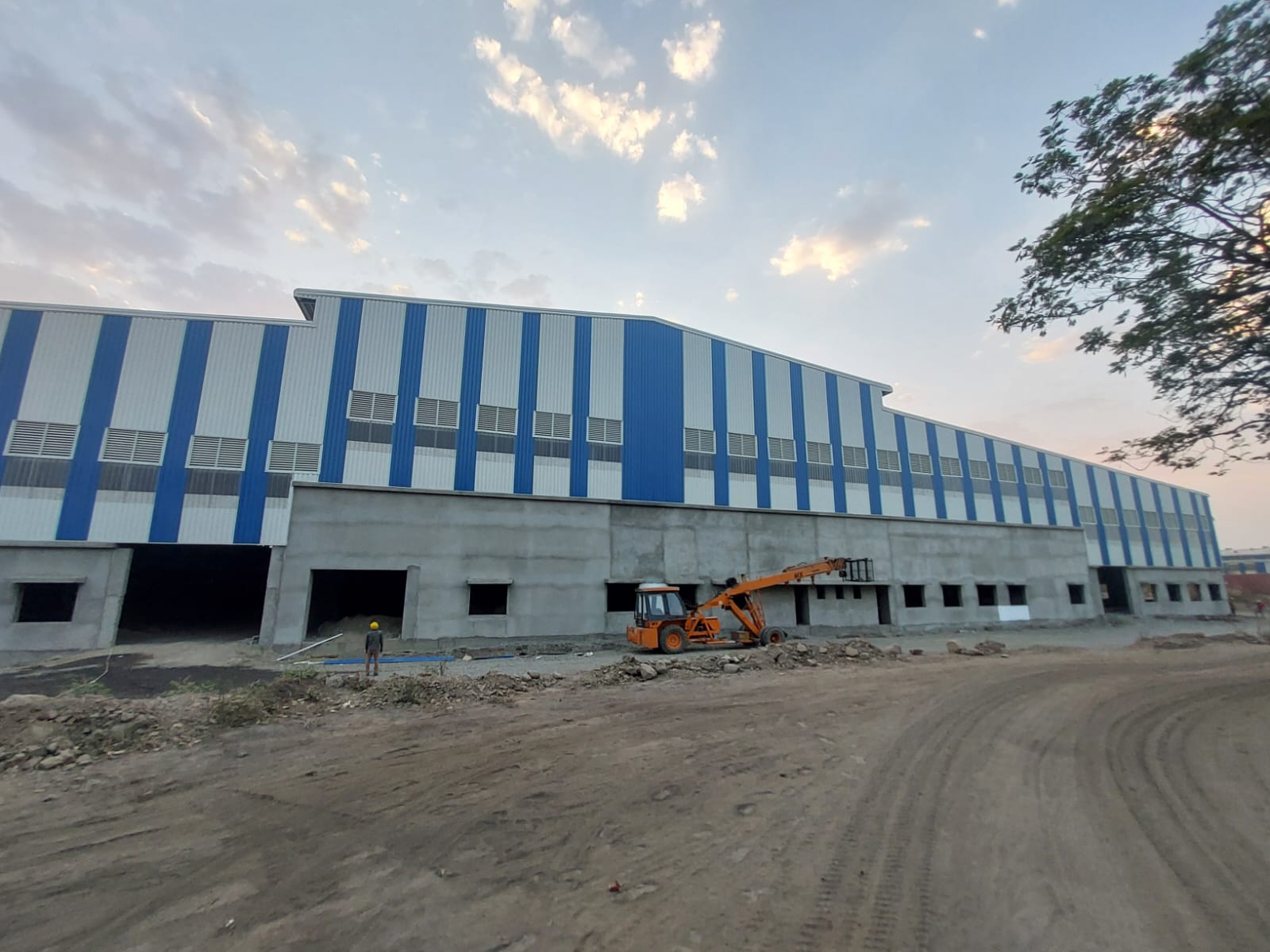
The decision is not as binary as it looks
Owners often arrive at a structural consultant with the choice already made — "we want a PEB" or "we want a conventional structure" — based on a single past project or a fabricator's pitch. The right answer depends on a multi-variable trade-off across span, height, crane capacity, load patterns and lifecycle ambition.
When PEB clearly wins
- Clear spans up to 30 m without heavy interior cranes.
- Eaves heights up to 12 m.
- Repetitive bay geometry — logistics warehouses, distribution centres, mid-size manufacturing sheds.
- Tight schedule (8–12 weeks for fabrication + erection).
- Low to moderate crane loads (under 10 MT).
When conventional steel wins
- Spans beyond 35 m.
- Heavy EOT cranes (25 MT+, especially tandem operation).
- Multi-storey process plants or pharma G+3 / G+6 structures.
- Significant equipment loads, jack beams, multiple mezzanines.
- Vibration-sensitive operations.
The hybrid zone
A surprisingly large share of industrial projects sit in the hybrid zone — PEB primary framing with conventional steel mezzanines, jack portals, gantry girders and crane buildings. MEC's portfolio includes 1,300+ MT PEBs with embedded heavy industrial elements engineered as conventional steel within the same envelope.
The lifecycle cost question
PEB shaves capex through standardised sections and faster erection. Conventional steel offers better adaptability for future capacity expansion, crane upgrades and additional floors. Owners with a 20-year facility horizon should price the option value of future modification into the decision.
How MEC frames the decision for clients
- We start with the operational brief, not the structural form.
- We run preliminary tonnage estimates for both options.
- We benchmark against past projects of comparable scale.
- We present a one-page comparison covering tonnage, cost, schedule, future-fit and risk.
Lead-magnet download: Our PEB vs. Conventional Steel cost-comparison calculator (Excel) — request it via the contact form and we will send it within two working days.