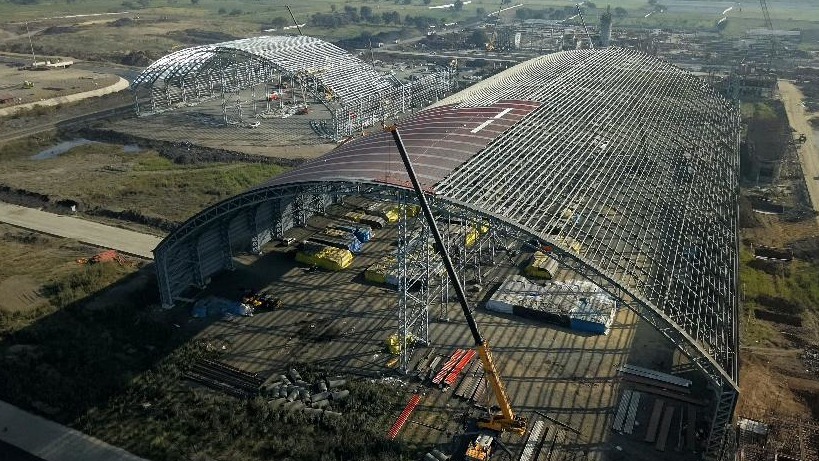
Why first cost is the wrong metric
Industrial asset comparisons that stop at first cost mislead the procurement decision. Steel and RCC behave differently across schedule, modifiability, maintenance and end-of-life.
The five lifecycle dimensions
- First cost — RCC usually 8–15% cheaper for low-rise, no-crane structures; steel competitive or cheaper for crane and tall structures.
- Schedule — steel typically saves 30–50% on construction time, which translates to earlier revenue.
- Modifiability — steel beats RCC on year-five expansion, year-ten crane upgrade.
- Maintenance — steel needs periodic coating renewal; RCC needs crack and waterproofing maintenance.
- End-of-life — steel has resale value; RCC has demolition cost.
How MEC frames the choice for clients
A two-page lifecycle comparison model that lets the client see the 25-year cost curve, not just the contract value. Sensitivities to coating-renewal cycle, expansion frequency and steel-price assumption are surfaced explicitly.
Lead-magnet download: Our steel vs. RCC lifecycle cost model — Excel template with the same logic we use on every materially-significant procurement decision. Request the model.